
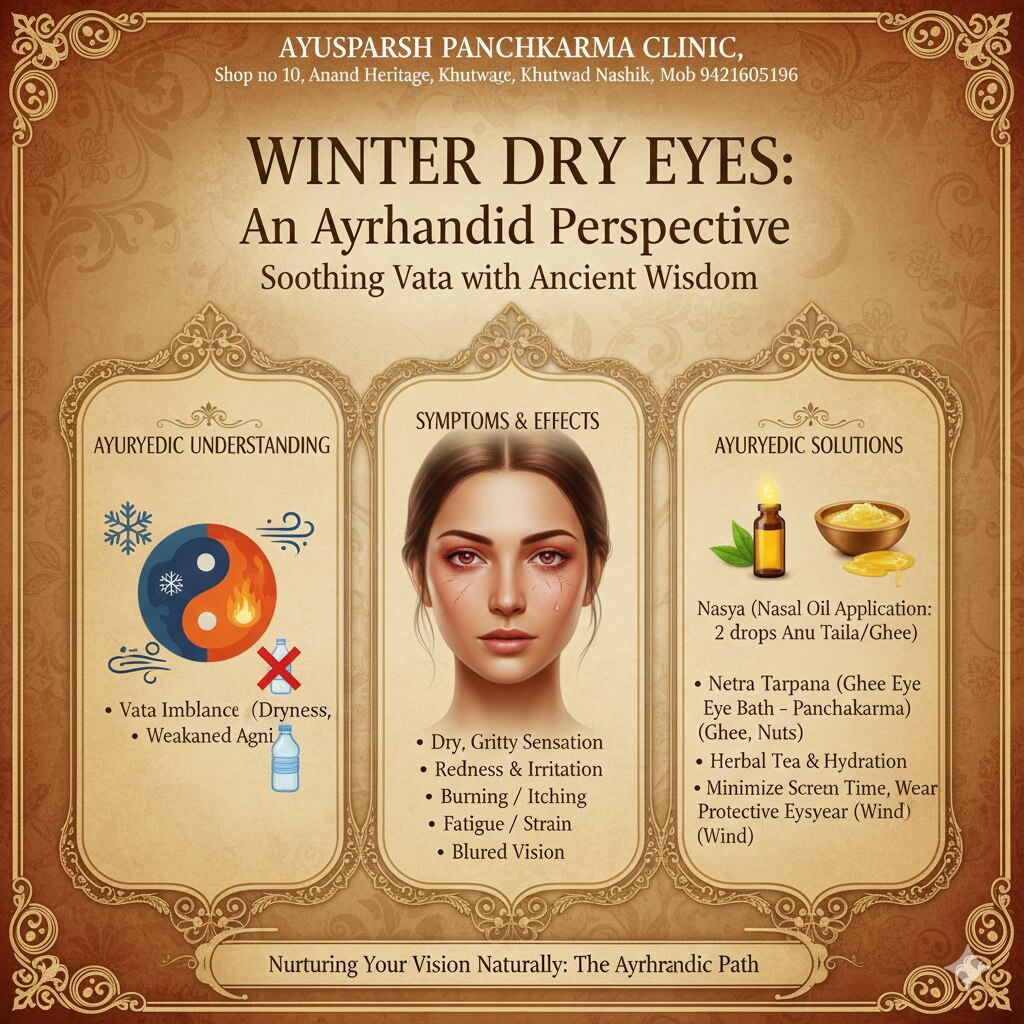
s: Soothing the Vata Vicious Cycle with Ayurveda
The arrival of the cold, dry air of the winter season (Shishira and Hemanta Ritus) brings with it the joys of warmth and hearty food, but often, it also brings discomfort—especially for our eyes. The phenomenon of dry eyes, common complaint this time of year.
At AYUSPARSH PANCHKARMA CLINIC, we view this condition not just as a lack of tears, but as a systemic imbalance, primarily involving the Vata dosha.
👁️ Ayurvedic Cause: Vata Aggravation
Winter air, coupled with indoor heating, possesses qualities that directly aggravate the Vata dosha:
Ruksha (Dryness): Cold winds and central heating strip moisture from the environment and the body. Vata's primary quality is dryness, and this environmental factor intensifies it.
Sheeta (Coldness): Cold constricts circulation, potentially impeding the flow of nourishing fluids to the eyes.
Laghu (Lightness/Mobile): The light and mobile quality of Vata leads to instability and roughness in the delicate tissues of the eyes.
When Vata increases, it reduces the natural lubricating fluids (Shleshaka Kapha) in the body, leading to the symptoms of dryness, irritation, and fatigue in the eyes.
Symptoms of Dry Eyes (Vata Imbalance in Akshi)
Rukshata: Dry, rough feeling in the eyes.
Toda: Pricking or stinging sensation.
Netra Shrama: Eye fatigue, strain, or tiredness, especially after screen time.
Dhoomaka Darshana: Blurred vision or smoky vision (due to dryness).
🌿 Ayurvedic Solutions for Winter Eye Care
The treatment principle (Chikitsa) focuses on pacifying Vata by introducing warm, unctuous (oily), and grounding qualities.
1. Internal Nurturing (Ahar/Diet)
Increase Healthy Fats: Consume cow's ghee, olive oil, and nuts (soaked almonds, walnuts). Ghee is highly Vata-pacifying and acts as an internal lubricant.
Warm, Cooked Foods: Favor warm, soupy, and freshly cooked meals. Avoid cold, dry, or raw foods, which increase Vata.
Herbal Support: Triphala (especially its Pitta-pacifying and Rasayana qualities) is excellent. Taking Triphala Ghrita internally can be highly beneficial.
2. Local Therapies (Vihar/Lifestyle)
Anjana/Aschyotana (Eye Drops): Use natural, herbal, and cooling eye drops prescribed by an Ayurvedic physician (like Rose water or specific herbal decoctions) to soothe irritation.
Netra Seka (Eye Wash): Gently splashing the eyes with lukewarm water several times a day.
Seka (Gentle Fomentation): Placing a clean cloth soaked in warm (not hot) water over the closed eyelids to soothe strain.
Limit Screen Time: Especially in dry environments, blinking frequently to maintain moisture.
3. Panchakarma Therapy (Best for Chronic Cases)
Netra Tarpana (Eye Bathing): Considered the gold standard for chronic Vata imbalance in the eyes. In this procedure, medicated ghee is held in a dough dam around the eyes for a specific period. This deeply nourishes the optic nerve, rejuvenates eye tissues, and significantly reduces dryness.
Don't let the Vata-aggravating winter steal the comfort and clarity from your eyes. Consult with us for a personalized approach.
📞 Contact AYUSPARSH PANCHKARMA CLINIC for Eye Consultation: Mob 9421605196 📍 Address: Shop no 10, Anand Heritage, Khutwad Nagar, Nashik